Thursday, October 8, 2009

YouTube Needs to Fail

YouTube. A name that changed the Internet forever. When it first started in February 2005 and debuted in November of that year, it had an awesome vision- to allow individuals to 'broadcast themselves' with a cheap, easy to make and upload video format. For possibly the first time, individuals had a type of broadcasting access to the airwaves of the information superhighway, in effect making people their own media companies.

It was no wonder that the site expanded rapidly in the summer of 2006. The decentralized, individualistic, and all-around free market of information on YouTube made it one of the fastest growing websites on the Internet, with people watching 100 million videos per day and uploading 65,000 at the same rate.

YouTube had become a paradise of individual creativity, an underground to the world's stifling media market. This was the time period that made YouTube what it is today- at least in terms of its market share on the Internet. As expected, "freedom is popular!"

Such times however, do not seem to last. A control freak is always waiting in the wings, ready to pounce on the free market for a variety of reasons.

Such was the case with YouTube. Under siege from the threat of copyright lawsuits (I.E.: using the guns of the state to protect "ownership" of a certain sequence and pattern of information) On October 9th, 2006, Google agreed to buy YouTube for $1.65 billion. The deal appeared to be a win-win for both parties, as Google had been wanting to compete with the rapidly-growing MySpace.com, expand beyond it's search-based revenue, and go into the social networking market. YouTube, for its part, would reap a great deal of revenue and be better-prepared for any lawsuits in the future. The deal was finalized on November 13th, 2006.

By this time, I had my own account on YouTube, and at first I noticed no obvious changes. By December, however, I noticed that many "copyrighted" videos were being removed. This was to be expected, and at first it was frustrating, but wasn't too terrible. Some cool inputs were added to the site, such as the ability to thumb up or down comments.

However, the website began to go downhill. The copyright vultures were always hovering over, always poised to attack those that skirted their barriers to entry. This can be most easily seen by the Viacom lawsuit, and later, the issues with Warner Music Group. Warner, in particular, was removing videos normally covered under Fair Use.

You'd think that Warner was doing this to represent their artists right? Nope. Several artists signed up with the record label are angry that their content has been removed from YouTube.

In all fairness, it is unfair to blame YouTube for ALL of this brouhaha. No one wants the guns of the state pointed at them, and this is what present Intellectual Property legislation demands. YouTube is at fault however, for completely failing to protect its users from false copyright claims or fair use content.

However, the current state of YouTube as we know it today, what I and others call GooTube (as in, watch what Google broadcasts) truly began with the YouTube Partner Program.

In a nutshell, the Partner Program allows users to take in a portion of ad revenue that their videos generate to YouTube. The program launched in 2007 and expanded rapidly in 2008.

Sounds great doesn't it? Here's the problem: GooTube has actively and vociferously promoted its partner videos over the rest of its user population. You will not find a definitive source for this, but every long-time YouTube user who has the ability to inductively reason will tell you that this is true. This is how the god-awful non-comic Fred was able to rise so rapidly in popularity: YouTube has endlessly promoted his videos on its front page. Here they actually admit their bias toward partners. This is in the form of their "spotlight videos." Ignore the idiots commenting on this page that don't see this for what it is. This is also apparent in that the "popular" page is shown before that of most viewed. Other pages, such as highest rated, are several clicks away to get to, thus turning many people away.

In addition to this, many people believe, and with good reason, that YouTube is censoring the view counts of its users (making it even harder to get onto the top viewed page). The example mentioned in the link is just one, and I believe this happened to me this past summer. My "The New Channels Suck!" video was frozen at 318 for at least two days, even though numerous comments were posted on it during that time.

In effect, the Partner Program has become a massive barrier to entry for small users attempting to expand their YouTube channel. What once was a free market in the exchange of information has become censored beyond belief since Google bought YouTube.

But just as it gets bad, it gets even worse. YouTube was transformed into GooTube, and recently, especially since Viacom and WMG began their saber-rattling, it has become ArchonTube (broadcast what the ruler says).

YouTube has been removing videos and suspending users for no apparent reason, even those with no noticeable "copyright infringement" at all. Indeed, my buddy, fellow Anarchist Vlogger InTheEndIWasRight, was suspended last week for no reason at all. Fortunately, his channel is now back up. Leading Anarchist confederalsocialist has gone through numerous accounts.

But perhaps the most egregious change of all occurred this summer, symbolizing perhaps once and for all the force-fitting conformity camp that a once-great website has been transformed into over the course of Google's ownership.

On June 24th, 2009, "YouTube" announced that it would be mandating that all users switch to the "beta channel" format. The response to the blog and companion introductory video was overwhelmingly negative, with the video receiving a one-and-a-half star rating and around 30,000 comments, around 95% of them being negative. The blog received the same reaction in its 66,000 comments.

In fact, the "beta" channels were so buggy that YouTube had no choice but to postpone the changeover. For two months nothing happened. Had the users won? Would these arrogant jerks at ArchonTube realize that customer feedback was nearly-one sided on the negative? Would the user base be able to keep the old channels, that worked extremely well since the site's inception? Would they honor the old maxim: "if it ain't broke, don't fix it?"

Nope. As expected, ArchonTube gave no care to the wishes of its customers and proceeded to go ahead and make the change anyway. My channel got hit last night.

The beta channel affair should make it clear once and for all now that YouTube is no longer the free market that honors individual initiative that it once was. It has become entirely fascized/corporatized. It is the same in name only, and while proceeding to make stupid changes that apparently only anger the user base, YouTube has been beset with numerous glitches, the most recent one having comments disappear. But ArchonTube is of course, too busy switching its customers into a new format that they don't seem to care about something so basic as this.

The writing is on the wall: YouTube needs to fail. It has treated its customers like crap for years. It believes that it's the only game in town, and unfortunately, it is somewhat right in that assessment. It still has the largest market share in its genre...by far. For this reason, it still has the most people congregating and networking, and this is why I'm still there for the most part: my channel is beginning to grow and I want to get more people onto the anti-state ship, and in all fairness, uploading and viewing videos there is still surprisingly, extremely simple.

However, its new methods of operation should not be tolerated. Like any business that treats its customers badly, people should vote with their feet, and a huge amount are already extremely dissatisfied with the direction the site has been going, especially the older users that have been around for a long time, like myself. The time is ripe for serious competitors to emerge if they can play their cards right, and rest assured I am looking for them.

confederalsocialist's Fringe Elements is a good place for anti-statists of all stripes to congregate, and is a nice way to begin detaching from ArchonTube. Perhaps a sort of video Agorism to promote competitors, marketed toward older users first might be a good way to begin to slay this dragon.

Tuesday, July 21, 2009

Moon Landings: Just Another Government Boondoggle

This is going to be hard for me to write. There's very, very few things that the federal government (and other states around the world) do that I actually like. In fact, space exploration is the only one that I can think of.

Yesterday marked the 40th anniversary of the Apollo 11 moon landing, and I only wish that I could have been alive at the time- to bask in the excitement of what we as a species can accomplish. I do hope that man lands on Mars in my lifetime.


All that said, it's now time to face the facts. The moon landing was conducted by NASA, a government agency funded by taxpayer money (aka) extortion. The moon landings in essence were just a massive PR stunt by the United States to demonstrate its 'superiority' over the Soviet Union (and it surely would have been the exact same thing were it the other way around).

That's the reason for Kennedy's famous "we choose to go to the moon" speech. (Or if you prefer, the full video.) That's the reason for NASA's fervor and dedication. While there indeed were some idealists in that project, the reason why it worked so efficiently (quite uncharacteristic of a government agency) was to get the world's most expensive and glorious PR stunt in history accomplished. And they did so, making Neil Armstrong the most glorified bureaucrat to ever live and guaranteeing NASA permanence as a government agency.

Because of this, what should have been a day of triumph for all of humanity was instead riddled with nationalistic hubris (as the Apollo 11 mission logo and the famous photographs demonstrate clearly).


What was accomplished by this mission, besides the already mentioned greatest PR stunt of all time?

The cost of the Apollo program was $25.4 billion, or $145 billion in 2007 dollars. (God knows what it will be in terms of 2009 and beyond dollars, they've already printed trillions.)

The ugly truth of this matter is that that wealth could have been used in ways that would have been productive to the economy. No one in their right mind would have invested in the moon landings because the gain would not match the investment. This is why the only way the landings could have been pulled off was for the state to extort money from its population and then spend it on something people would normally not want to. No matter the triumph, it is not justified to steal money from others in order to accomplish it.

What has NASA done since the last moon landing in 1972? It's become a typical government bureaucracy, mired in inefficiency, laziness, and graft. This is made evident by the fact that NASA even erased the original footage of the Apollo 11 moon landing!

Since the bygone Apollo days, NASA has been stuck launching satellites (among them the space telescopes such as Hubble and the new Kepler, something private foundations could have easily done), and putting people in low Earth orbit for no apparent reason except to keep a permanent human presence in space, lodging them in the still incomplete International Space Station.

In addition to the bone-crunching cost of keeping people in space per day (paid for by you, of course), prolonged zero-gravity exposure has very detrimental effects on the human body. Thus we are forced to needlessly endanger people's health, even when there is no imperative scientific operation underway.

Where does this put the future of human spaceflight? Is it really something that we want to leave to states? Being somewhat of an astronomy geek and science fiction writer, there's no doubt in my mind that space exploration (culminated of course in the moon landings), is the coolest thing that the government has ever done. However, mass extortion was needed to fund it, and the ends do not justify the means. Fortunately, help is on the way!

Finally, it appears that private enterprise is entering the space market.
Undoubtedly, the prohibitive cost of sending matter into space has been holding the free market back from taking off beyond Earth. However, a few brave entrepreneurs are now taking up the challenge. Richard Branson and Virgin Galactic are the most famous examples that come to mind. Indeed, Virgin Galactic has just recently broken ground on the world's first commercial spaceport! The concept art for it is below:


I'm sounding like a geek now, I know, but I can't help it. The first few years (or decades) will be very expensive, thus reserving spaceflight for the wealthy, but so then were the first cars and air travel. The free market lowered their costs quite quickly, and ought to do the same for space travel too.

What will be the obstacle for the success of such enterprises? Undoubtedly, the arch-nemesis of free markets everywhere: the state. It can do this in a number of ways: taxes that siphon off money that could be used for further investment, regulating commercial spaceflights with silly agencies like the TSA, or inflating the money supply, thus making people poor and further unable to invest or demand as much of private enterprise.

These are just a few of the barriers to entry the state may try in the future. However, even NASA's future may depend on private initiatives.

I sincerely hope that the market is allowed to work, and take space out of the hands of states and their armies of bureaucrats. Perhaps there will even be private spaceflights to the Moon and Mars. Now I sound even more far fetched, but maybe there will even be private colonization efforts on the Red Planet.

This could only happen by the end of my lifetime most probably (at the earliest), but if it means I could escape the madness of this world of states and live out my last few years in freedom, I'd be there in a heartbeat, however remote the chance.

Here's hoping that the future of space travel be taken out of the hands of states and turned over to the marketplace.

But hope isn't enough, liberty lovers and space enthusiasts alike must work toward achieving the goal, whether this be by investing, popularizing private space ventures, or by smashing the state.


To hell with the glorified bureaucrats, guys like this are my heroes!


Free on Mars? This is my greatest dream of space travel, let's work to achieve it!

Wednesday, April 15, 2009

The Evils of Income Taxation

It's April 15th...and you know what that means, long lines at post offices, comprised of people sending in their slave forms...err "tax returns" to the government. The income tax and the IRS are the worst of the worst that the federal government has to offer (this is saying quite a lot indeed!). There is no greater demonstration of who rules who, of the people's submission, and the loss of America's founding ideal of individual liberty. America has gone from a nation of sovereign individualism to a nation of servitude to a centralized authority. Today's system is one of modern feudalism, and the income tax is the greatest indicator.

Unfortunately, the income tax has become so ingrained in our culture that most people barely give it a thought. You constantly hear people saying "I hate it, but it's necessary" or "how will the government operate?" A few years ago I even saw a news clip of a bunch of guys with nothing better to do lining up and singing "happy tax day to you."

The income tax is the greatest tool our illegitimate rulers have against the people waking up to their game. It is constantly used to divide us, set one "income class" off against another, having people debate the merits of a tax credit for one group or another, getting people to scream useless shit like "the middle class needs a tax cut!" or "the rich need to pay more!" or "cutting taxes on the rich will stimulate the economy!" I've seen and heard it all. The ruling, stated class uses these sleight-of-hand tactics to keep their big boot on top of everyone else and make them believe that this is actually what people want and need. Indeed, as the famous philosopher of freedom, G. Edward Griffin states: "the income tax is a collectivist's favorite tool."


At the heart of the philosophy that allows for an income tax lies a great evil. Slavery in the United States was abolished by the 13th amendment, setting a group of people free from hundreds of years of bondage. Unfortunately, the means to these people's freedom was government, which greatly expanded its power in the process. And of course, government was not just going to give up its newfound strength, the law of unintended consequences was already at work.

The modern federal juggernaut state was sealed in the revolution of 1913. We have this horrible year to thank for the Federal Reserve System, the 17th amendment, which deprived states of their representation in Washington, which killed federalism and replaced it with the current system of states being vassals to the feds that I outlined in my previous essay, and the topic at hand, the 16th amendment, which reduced not just blacks, but everyone to slavery.


Slavery is defined as the state of being under the control of another person. The 16th amendment did just that.

While the days of physical, chattel slavery have long been gone in America, the federal income tax makes everyone a slave to the federal government. At the heart of the income tax is the doctrine of collectivized wealth. What this basically means is that the central authority assumes ownership of every penny that every American makes, and what they can keep is solely due to the good graces of our feudal lords, the feds. This is the same whether the tax is 1% or 100.% The rate of taxation itself is irrelevant. Case in point, our rulers in 1913 promised that very little people would have to pay the income tax. After all it was a "tax on the rich." However, the top rate quickly went from 7% in 1913 73% in 1918, and the bottom rate from 1% at below $20,000 in 1913 to 16% at that income bracket in 1918, with the minimal rate at paying any tax at a mere $4,000.

At one point in 1944, the rate was at an unbelievable 94%. So much for the promises that the politicians made. Then, as now, they are utter absurdities. To say that people operating or connected to something with a monopoly on violence are beholden to keeping their promises is like saying that another star will pass through our solar system tomorrow.

The rates confirm the theory: the politicians own all of your property- you are a peasent, a serf. They can change the rate that you pay at any time, for whatever reason. There is nothing stopping them from taking everything and making you a bona fide slave where master keeps everything you produce. The income tax exhibits all of the hallmarks of feudalism. To show how today's state is indeed a modern emanation of the feudal system, let us jump back in time to the Middle Ages.

In the feudal economy, there was a virtually non-existant free market. Though the life of the Medieval peasent was not as horrible as is generally portrayed, they were permanently tied to the manor of their feudal lord, they could not leave to seek employment on another manor, for example. It was only very rarely that the serf could become what was known as a "freeman." It was expected that the paesent work the lord's land three days a week, and even make repairs to his home! The feudal lord could tax anything, at anytime, and much of the peasent's crop yields went to the lord. Failure to conform to the lord's rules and work his land, or give up any other part of your property that he deemed necessary could mean cruel Medieval punishments, such as trial by ordeal.

Sounds like the IRS, doesn't it? How many times have Americans over the past century been 'audited' by the bloodsuckers, deeming that some necessary 'back-taxes' (often from a number of years ago) were owed? Indeed, this happened to my own family this past winter. How nice of them to say that they were wrong in their assumptions, never mind the hassling and threatening letters, often the logo of the IRS on a letterhead alone is enough to make people fearful. Stories like this are the reason more Americans fear an audit by the IRS than a terrorist attack.


Many people often make the argument that income taxes are unconstitutional, or intentionally and deceptively misapplied by the government. While I would not doubt their claims, as I would not doubt that the government would find a way to collect any funds they could without setting off a big red alert among the people, I believe the tax-protester movement is barking up the wrong tree. While I am sympathetic with their goals, it is a big waste of time to say things like 'show me the law.' 'The law' is irrelevant. The government says that they want the loot, and they have the means of extracting it. Investigating whether or not the violent monopoly is following its own procedures is diverting attention from the real ethical issue in question: the reduction of Americans to serfdom, as well as the economics of why the tax is indefeasible in the effort toward helping the poor, the classic argument in favor of the income tax (though this is a different topic). It is simply not worth going to jail (or being killed) over, when the protesters could be of better help fighting the ideological struggle.

So, this April 15th, instead of attempting to reduce our humiliation and bondage to a cultural ritual, while making fun of how taxes suck and seeing Obama's tax return that I do not doubt will be on some news network (to show that our rulers are, 'just like us'), it might be a better idea to use this day to spread the word about the absolute evils of income taxation, and organize to figure out a way to break this state of bondage.

It is time to leave the manor.

P.S.: A couple of days ago I saw some newscaster reporting on how "San Francisco is the city where people file their tax returns the latest on average."

Awww...those poor San Franciscans. They're supposed to be good serfs and file on time! Or even better, early!

Sunday, February 22, 2009

A Much Needed Lesson in Federalism

With an increasing number of states declaring or introducing resolutions to declare sovereignty (21 according to my last check), the issue of federalism might finally start to be meaningfully discussed again. There is an air of revolution about, and the long-lost doctrine of state's rights might be a part of such a revolution.

So what is federalism anyway? Here is an extensive philosophical treatise on it, but it is more simply defined as a body of more or less self-governing entities collaborating to form a center of gravity that would have powers over areas concerning the entirety of the said bodies, such as national defense.

This was the original intent of the Founding Fathers as they set up the Constitution of the United States (though I am increasingly beginning to believe that a certain number of them, especially Alexander Hamilton, deliberately left loopholes in the Constitution to undermine this).

The federalism of the past has been replaced with a system of de facto unitary government, with the federal government being supreme and the states merely acting as its vassals. Nowhere is this more evident than in the unfunded mandates forced upon the states should they desire to get back some of the money sucked out of them by the feds. Louisiana Governor Bobby Jindal rejecting the stimulus handout for his state is evidence that the states may finally be ready to fight back against federal mandates tied in with such funds. Whether Jindal's rejection has more to do with politics or principal remains to be seen.

Needless to say, the states being vassals and the feds acting as feudal lord is not the system that was envisioned by most of America's founders. The case is made by Thomas Jefferson in this short letter. Contrast this notion of popular sovereignty with the centralized autocratic state of today. The National Minimum Drinking Age Act is a perfect example that the states, rather than being the self-governing entities they were in the past have been reduced to a state of vassalage. For all of American history prior to that point, the drinking age was, as it should be, a state prerogative. When you read the article I mentioned above, notice how the feds set up a system of carrots and sticks to the states, as if they were mere serfs instead of the autonomous and sovereign bodies put forth in the constitution (though lessened from the Articles of Confederation).

While the NMDA attached penalties to states that did not raise their drinking ages, in essence paying lip service to such things being the prerogative of the states and not the federal government, other bills give no heed whatsoever. Take for example a recent bill that has gun owners very concerned. H.R. 45 would essentially criminalize possession of any firearm without a novel little thing called a "Blair Holt License." (I love how politicians name bills after people who died in incidents, sensationalizing them in an attempt to create hysteria and take the moral high ground, as if their bills were not about controlling people!)

Where in the constitution do the feds get authority to issue such a license to ordinary citizens who want to exercise their right to bear arms (or issuing "Federal Firearms Licenses") to owners of gun shops? Stretching the commerce clause to the limit again?

The simple answer is that the feds for the most part are power hungry thugs. They will look for any opportunity to expand their power and then cite this as a reason why they need to be re-elected, skirting around the constitution in any possible way they can in the process.

This is the present situation, and it is here and now that some bold state legislators are finally entering the fray. The New Hampshire Sovereignty Resolution is one of the strongest out there opposing unconstitutional federal power. (Although it has since been killed, it is a step in the right direction, and ideas always advance over time, and resolutions are still pending in many other states!)

So where do state rights and prerogatives come from anyway? The most obvious examples of course are the ninth and tenth amendments, ratified in the federal (not unitary) spirit of late 18th century America. These two amendments attempted to make certain that certain rights were not denied and were reserved to the states and people. The last two amendments in the Bill of Rights were essential to some states agreeing to the federal compact.

But a deeper philosophical question ought to be asked here? Where did the federal government come from anyway? What gives the it its power and authority? The average person would probably says "the constitution." However, this is not an adequate answer and begs the question.

The answer is of course, found in the preamble, "We the People." However, now the question needs to be raised as to how We the People ratified the constitution. The constitution was ratified by the people acting through their elected representatives in the state in which they resided. Take the Virginia ratification, for example.

In essence, the people, acting through the states, created the federal government, and it was always understood that the states were to be the primary means by which the people would have their say, as that is where most of the power was supposed to reside except for the few specialized instances put into the constitution through Article 1, Section 8).

Now we must come to the conclusion that the federal government is a creature of the people and the states, not the other way around. It is not, and never was supposed to be a unitary authority that dictates people's private lives and tells state governments what to do. The created can never be more powerful than the creator.

The truth is that the people must put the federal beast back into its cage, and they must do this through the states (primarily). The states of course, are quite corrupt as well, and it will indeed be a true battle to take those back alone, but the sovereignty resolutions show that the states are on the right path.

Trying to get the feds under control through their own power system is for most purposes, a pipe dream. It is simply counter productive to hope for the feds to use their power more temperately, as we have seen recently with the election of Barack Obama. It is increasingly becoming clear through just the first few months of his administration that he will not change anything substantively and continue to feed the dangerous federal beast. People like Ron Paul are rare, and while they should always be encouraged, they will affect little change unless the people and states find the true meaning of federalism again.

Further Reading:
The 10th Amendment Center

Monday, February 16, 2009

The Pale Blue Dot

Two days ago, the nineteenth anniversary of the taking of an iconic photograph passed. On February 14th, 1990, Voyager 1 was turned back one last time toward the solar system it was now on course to leave.

3.6 billion miles away, the cameras photographed the Sun and visible planets (Pluto and Mars were too small to see from that distance and Mercury was lost in the glare of the Sun).


Among those visible was the Earth. It showed up as a mere blue pixel at such a huge distance. For the first time, humanity was now able to see visually what Copernicus and Galileo had proven centuries earlier: that humanity was far from the center of the universe and that for all intents and purposes, we are insignificant in the grand scheme of things.


However, there is one thing that ought to hit home about this photograph. We might indeed be insignificant overall, but so far, we as humans are very unique in the universe as the only intelligent civilization on the only planet that is known so far to have life on it. Carl Sagan had some memorable words to deliver on the subject of this dichotomy:

Look again at that dot. That's here. That's home. That's us. On it everyone you love, everyone you know, everyone you ever heard of, every human being who ever was, lived out their lives. The aggregate of our joy and suffering, thousands of confident religions, ideologies, and economic doctrines, every hunter and forager, every hero and coward, every creator and destroyer of civilization, every king and peasant, every young couple in love, every mother and father, hopeful child, inventor and explorer, every teacher of morals, every corrupt politician, every "superstar," every "supreme leader," every saint and sinner in the history of our species lived there – on a mote of dust suspended in a sunbeam.

The Earth is a very small stage in a vast cosmic arena. Think of the rivers of blood spilled by all those generals and emperors so that, in glory and triumph, they could become the momentary masters of a fraction of a dot. Think of the endless cruelties visited by the inhabitants of one corner of this pixel on the scarcely distinguishable inhabitants of some other corner, how frequent their misunderstandings, how eager they are to kill one another, how fervent their hatreds.

Our posturings, our imagined self-importance, the delusion that we have some privileged position in the Universe, are challenged by this point of pale light. Our planet is a lonely speck in the great enveloping cosmic dark. In our obscurity, in all this vastness, there is no hint that help will come from elsewhere to save us from ourselves.

The Earth is the only world known so far to harbor life. There is nowhere else, at least in the near future, to which our species could migrate. Visit, yes. Settle, not yet. Like it or not, for the moment the Earth is where we make our stand.

It has been said that astronomy is a humbling and character-building experience. There is perhaps no better demonstration of the folly of human conceits than this distant image of our tiny world. To me, it underscores our responsibility to deal more kindly with one another, and to preserve and cherish the pale blue dot, the only home we've ever known.


That passage of Sagan's instantly made me think of the state and statism as being the primary cause of all of humankind's problems. Surely, the abolition of the state will not end violence and misunderstanding among man, as man is a fallible creature. However, the biggest problem among humanity and the primary cause of our division is undoubtedly the state.

The state actively promotes this misunderstanding by violently forcing people to live in a certain way. Every individual's morals, beliefs, hopes, and dreams, are different. The state ignores this fact with its violent monopoly. It forces the individuals the it claims jurisdiction over to conform to its wishes. To solidify its power base, the ruling class that the state fosters often invokes a spirit of the greatness of a certain group to demonize outsiders or members of a different ethnic group or class. The "endless cruelties" that Sagan spoke of inevitably follows. We saw this recently in Rwanda in 1994, and more recently, in Sudan in the present day. For more historical examples, we ought to look toward the Rape of Nanking in World War II and the atrocities of the French Revolution.

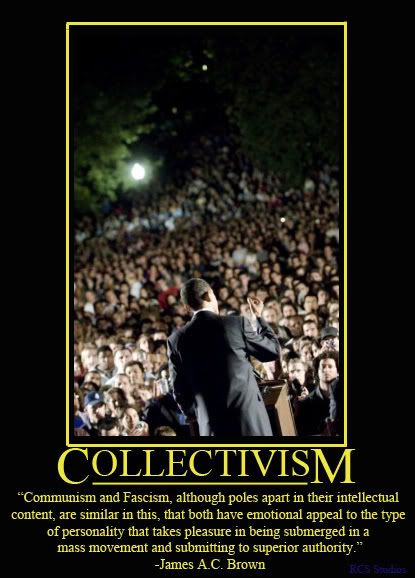
There are countless other examples, but I cited these to show that the "cruelties visited by the inhabitants of one corner of this pixel on the scarcely distinguishable inhabitants of some other corner" are not just the work of Europeans and their descendants against non-Westerners as the current vogue of political correctness would have so many people believe. The problem is not one group of people, the problem is the ideology of collectivism, and the institution of a state is the ultimate expression of collectivism.


By legitimizing the initiation of violence and instituting group thinking, the inevitable result will be violence in favor of one group or another, with the perceived inferiors or outsiders suffering. Statism is responsible for every atrocity and tragic war in recorded history. It is a religion that demands constant blood sacrifice. This is all in the name of attaining some perceived good, of course. In ancient times, this was such things as bringing "civilization" to the "barbarians," or more brazenly, the glory of conquest.

Of course, these things still very much exist, only now they are disguised in more likable language, such as "freeing people from tyranny" or "spreading democracy around the globe."

The problem is, even to those that are good intentioned about such things, in essence this is telling other people how to live. Thus it falls into the same trap- collectivism. Those who disagree over how the state tells them to live must then be sacrificed in the name of the so-called majority that the state serves (in reality, in the interest of the state itself, and the of the ruling class that it fosters.) Inevitably, those whose way of life is being threatened will fight back, as we've seen from the 300 Spartans to Sitting Bull at the Battle of the Little Big Horn.

The state has always- and will always, cause needless bloodshed. It will always divide people into different groups and then favor one over another. This is why the Pale Blue Dot has been tainted so red with blood over the eons.


Humanity must come to the realization that there is no right way to live, except to live nonviolently. You or me cannot tell Jane what she must value, how she must raise her children, or what she must do with her money (though we may attempt to use the power of friendly persuasion). If such a thing was attempted Jane would laugh in our face, and if we persisted and brought some guns in, she'd probably get exceedingly angry and only grudgingly accept our values because of the violence we threaten her with.

This most people would generally agree with, but why then do they accept that kings or committees can do what we ourselves cannot? This is an utter absurdity. It is this tension that results from the organized violence of the state that has proven so tragic over history.

It is long past due that humanity emphatically reject collectivism, and its extension, the state, in all its forms. We must recognize the fact that we belong to only one distinction: individual human beings who live on Planet Earth. "Only then can we deal more kindly with one another through mutual understanding rather than pointing guns in each other's faces, and preserve and cherish the Pale Blue Dot."

Tuesday, February 3, 2009

24: Season Seven and Non-Intervention

24 is probably one of the most controversial television shows out there. The fact that it has given popular credence to torture to prevent terrorism has drawn both praises and accusations that the show's creators are sympathetic to the heatedly-debated anti-terror initiatives of the Bush Administration. I have not looked at the politics and ethics involved in the show, as I realize that it is a work of fiction, and is surprisingly very entertaining to me, even though I am a staunch libertarian.


However this season is shaping up to be very different, as it is a radical shift from the previous seasons. CTU has been disbanded, and instead of taking place in Los Angeles, the action is now in Washington D.C. The biggest difference however, is in the terrorist threat. Instead of using external weapons of mass destruction, the terrorists hijacked a module (called a CIP device) that allows for breaches of the government's firewall systems to cause massive damage internally. The conspiracy (which includes members of the President's own staff) is led by a Colonel Ike Dubaku of the fictional country of Sangala, who in the last episode was stopped by Jack Bauer & Crew just in the nick of time before he killed tens of thousands of Americans by using the hacking module to release toxins from an insecticide plant in Ohio.


The reasons for Colonel Dubaku's aggression are very simple in this season, far from the complicated self-rightousness of the threats in previous seasons. Dubaku is angered about America's interventionism in his country of Sangala.

The events of season seven so far ought to give further credence in the argument for a non-interventionist foreign policy as advocated by America's Founding Fathers.

President Taylor has an armada on the African coast, ready to invade Sangala and forcibly evict the sitting regime, which is carrying out a genocide on hundreds of thousands of Sangalans. The armada causes Dubaku to enter the United States and bribe government officials with diamonds. He then gets ready to kill American citizens.

This is the classic example of the CIA's term of 'blowback' that Ron Paul cited so frequently in his 2007-8 campaign for the presidency. While we as Americans in no way sympathize with Dubaku (and more importantly, his real life counterparts), what ought to be the U.S. government's priorities?


The reason a government supposedly is set up is to protect the people living within its borders from aggression. This is the only reason the Founders set government up and wrote the Constitution. Even in today's age of Democratic-Socialism and pervasive dependence on the government for nearly anything imaginable, the core premise for its existence is still, fortunately, the Enlightenment ideal that it is a necessary evil to protect individuals against aggressors.

Yet in 24: Season Seven, we once again see how flimsy this notion is, and it is once again turned on its head. The United States government has again stuck its big nose where it did not belong, which fostered resentment resulting in a strike to the said nose. Unfortunately, it is the innocent American people who now must suffer because of their misguided government.

I reiterate that we should never sympathize with people like Dubaku who are causing the deaths of innocent people in a foreign land. However, the United States government is mandated to protect the American people through the Constitution, and nowhere in that document is permission given to the President to send an overseas armada to a foreign country without a congressional declaration of war.

In 24: Season Seven, war was not declared on Sangala, and I find nowhere in the events leading up to the season that it had anything to do with United States national security. What I am able to deduce so far is that the president unilaterally sent an armada to Sangala to stop Dubaku's faction from continuing to destroy innocent life.

While this is indeed, a noble purpose, it is not authorized under the Constitution, and more importantly, has nothing to do with U.S. national security. However, due to the government's foreign involvement, it becomes a matter of national security when the terrorists then come to kill Americans as a response!

To put it more simply: the government created the problem, then Dubaku reacted and actually threatened Americans. Now, the government has to solve the problems that it created!

Unfortunately, this isn't just a work of fiction. This is happening in real life, right now. This is what caused the attacks of September 11th and started the "War on Terror" (which is only adding fuel to the fire).

For too long, the United States has told the people of the world what to do and how to live. We see this perfectly in Iraq by trying to bring American "democracy" to that country. It is certainly not surprising that many people see this as a foreign invader that is occupying their country and taking control. Naturally, this is going to generate resentment, and all too often, violence to protect themselves against what they (the people in the countries America sends troops to or controls via proxy) see as aggression on their way of life.


This should not be difficult for us to understand. Americans went through the same thing. We call it the American Revolution. The colonists were unhappy with new taxes, and mounted their protests against them. The British government responded with ever-increasing authoritarianism, highlighted by the Intolerable Acts.

The most vile of these was the Massachusetts Government Act. This made self-government nearly impossible, and it is not surprising that the rest of the colonies sympathized with Massachusetts and recognized that their way of life was also under threat. The first Continental Congress met to discuss this fact in July of 1774. A mere nine months later, the first shots were exchanged at Lexington and Concord, igniting the war of independence.


The insurgency in Iraq is a modern example that ought to show that a foreign power attempting to tell a population how to live has historically gone very wrong and led to much bloodshed. The local populace is deeply resentful of the interference in their lives, and often enough will lead to radicalization, as we saw in the American Revolution with the Patriots eventually unanimously supporting independence from Britain (which was a radical measure and unthinkable even in the Continental Congress of 1774). Similarly, our invasion of Iraq has led to the radicalization of Iraqis in the insurgency in the present.

It ought to have come as no surprise that the attacks of 9/11 occurred. America's imperial presence in the Middle East since the Shah was installed in Iran in 1953 fostered radicalization that led to the deaths of innocent civilians. What's worse, instead of reassessing foreign policy after 9/11, the same imperial trend accelerated in the invasion of Iraq, leading to a greater possibility of other attacks in the future. The effort to prevent these attacks has eroded our civil liberties, all in the name of empire.

One thing that nearly made me fall out of my seat when watching 24: Season Seven was when President Taylor, on explaining her willingness to move forward with the invasion of Sangala even after Dubaku used the CIP device to cause a mid-air collision between two commercial airliners, and threatened an even greater attack, used the reasoning that she was "determined to keep America as a force for good in the world."


We must always watch out with those sorts of statements. No one can clearly define what 'good' is, as it is something very much in the eye of the beholder. This, coupled with the violent nature of government, means forceful conformity to a certain view of 'good,' in effect, telling other people how to live.

The result, as already explained, has been an endless cycle of aggression and backlash. Government cannot decide what 'good' is and then force people to conform to that view. Only an individual can decide this for himself, and then try to persuade others to that view. While most of us would agree that people like Dubaku and what he represents must not be supported, the government forcing us to that view can only create problems, as we are now seeing in the events of this season of 24.

Is it worth it to "keep America as a force for good in the world" even though the consequences may be untold destruction of American lives and the degradation of civil liberties that will surely be done in the name of preventing another such circumstance?

I think not.

Saturday, January 24, 2009

Rome & America: Twins Bound by Fate?

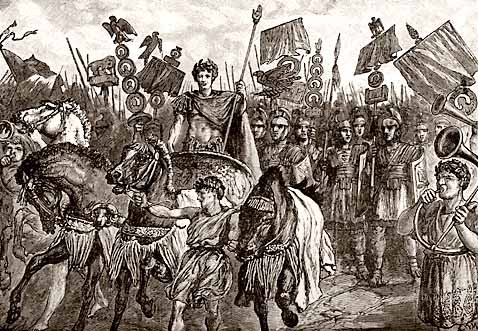
There are few events in history more fascinating to the popular imagination than the fall of the Roman Empire. For one thousand years, the great empire dominated the Western World, stretching from Britain in the north to Egypt in the south, from Spain in the west to Syria in the east. Its legions were a mighty military machine, conquering all before them, its economy boomed through trade with many tribes, its language and laws bound and conformed many nations into one civilization, and its greatest names- Caesar, Augustus, Constantine- still echo throughout history.


It is no wonder why statists admire the Romans so much. They see an energetic government that brought law and order to many diverse lands under laws that are the still the general foundation of our legal system.

Nor can it be argued that the Romans brought great improvements upon civilization- the invention of the aqueduct, for example brought fresh, clean water to people all across the Empire (a far better invention than a pyramid to suit some king's ambition, great architectural splendor thought it may be. Even an anonymous Roman writer said something to this effect.). It was under the Romans that the civilization of Classical and Hellenistic Greece reached their apex. Art flourished and trade boomed. The roads that the Romans built were in general use for thousands of years and some are even still used today.

Yet at one point, Rome ceased to rise, then slowly and painfully declined, and finally fell flat on its face, ushering in the Dark Ages, a time where life was short, scary, and cruel. It is no wonder why the collapse of this spectacular empire still fascinates us some 1,500 years later.

Inevitably we ask why such a great empire could fall. How did the mightiest state to ever exist up until that time, collapse so resoundingly?


There were many reasons, but for a modern example we ought to look not in the ancient past, but to our own time, for a rough equivalent exists in today's world: the United States of America. This may sound somewhat odd at first, but the path that America is on is somewhat the same as the Romans were. The similarities between the two are so striking that they even go back to the formation of the two states.

Rome had its beginnings as a city ruled by Etruscan kings. The monarchy was overthrown in 509 BC in a revolt led by Brutus. The Romans called King Tarquin a tyrant, and established a republic to prevent one man from ever attaining too much power. How similar is this to the American Revolution? Indeed, the Founding Fathers looked to the Roman Republic as a model for what they were doing, hoping to learn the lessons of the past. They saw that their revolt against King George III was strangely similar to the Roman Revolt against King Tarquin.

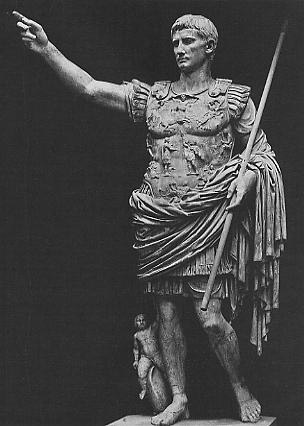
Both states rose and expanded. Rome slowly, but surely, conquered the Mediterranean and Western Europe by the reign of the Emperor Claudius. Rome's only major setback in this period was the crushing defeat suffered in the Teutoburg Forest at the hands of Arminius in 9 A.D. This defeat halted Rome's expansion in Europe, and except for a brief incursion by Emperor Trajan, set the permanent European boundary of the Empire. Sir Edward Creasy in his 15 Decisive Battles of the World describes this battle as a death knell to Rome, as the Elbe-Danube frontier that the conquest of Germania was meant to establish would have been a much easier border to defend then the Rhine-Danube edge that came to be fixed. The loss was so great that Augustus is reported to have screamed in his sleep: "Varus, give me back my legions!"


Rome recovered however, and continued to remain strong. She conquered Britain 30 years later and her economy boomed. However, this battle ended the great age of Roman conquests.

Likewise, the American military machine is the strongest to ever exist. American arms are unmatched, and we as Americans take a huge amount of foolish pride in thinking that our country has "never lost a war."


It has often been noted that our humble beginnings as a constitutional republic have been transformed into an American Empire- though an empire marked more by economics and puppet states rather than outright military conquest. The American Empire has not yet met a disastrous defeat such as that of Varus in the Teutoburg wilds, but the insurgencies in Iraq and Afghanistan have begun to push forward a much needed debate that has been lacking in this country for 60 years: is all of this foreign intervention worth it? The movement for a non-interventionist foreign policy in the advice of our founders is now beginning to take shape.

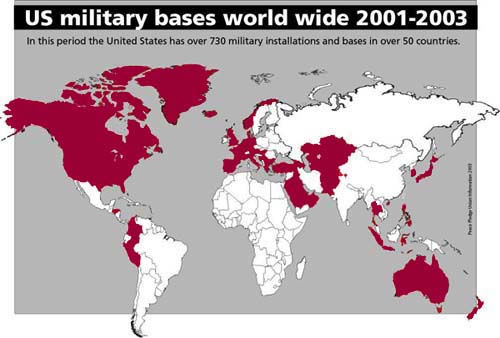
It couldn't come soon enough. As of 2007, there are 737 American military bases around the world (that we know of).


Finally, this brings us into the fall of Rome. One huge reason that the Roman Empire collapsed was due to its military instability.

There were many civil wars in Rome, while America has been fortunate enough to only have been embroiled in one. This I will grant a big difference. However, the differences stop there.

The Roman legions had a huge territory to defend. The Empire extended around the entire basin of the Mediterranean Sea, from the Atlantic Ocean to the Rhine, Danube, and Euphrates rivers to the east, south into the Sahara, and north into Scotland.


Rome never had more than 28 legions, of which, three were lost and never replaced in the disaster of the Teutoburg Forest. This brings us down to 25 legions of 5,240 men each. Rome also employed around the same number of auxiliary units, which combined gave a total of more or less 262,000 professional troops under arms at any given time

Impressive though this may be for the ancient world, the Roman Empire covered 2.2 million square miles. This amount of territory probably needed a million or more soldiers to defend it.

Thus, the Roman army was constantly stretched thin. It needed to guard against aggressors outside the Empire's vast boundaries, as well as guard against revolts, thus it needed to shift back and forth to different posts across thousands of miles of territory.


Likewise, the American military is stretched all over the world. As the Roman army was stretched to the breaking point due to the vast amount of territory it had to defend, the American military is constantly being reported as being stretched to the breaking point to fill all of these unnecessary military bases on foreign shores.

To counteract this, military spending in America has gone way up, from $333 billion in 2001, when the War in Afghanistan began, to an expected $700 billion + for the coming year.

This is not at all different from Rome. To defend its massive border, the Roman Empire had to spend hugely on its military. This drain on the economy left many disillusioned and unwilling to support the army or the state. Eventually, the amount of money coming into the Empire from taxation was simply not enough to sustain the massive Roman government.

Then, as now, to counteract this, Rome and America have turned to the same course: devaluing the currency. From here, we come to the second major reason for Rome's fall: economic.

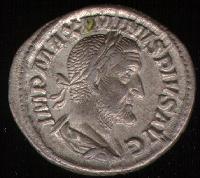
The main currency of Rome was the Denarius, which comprised a certain amount of silver in the coinage. The other mainline currency was the gold-based Aureus, with the rate of exchange between the two being 25:1 during the empire's glory years.


For hundreds of years, this worked fantastically. But as the glory of conquest faded (and the complementary plunder that came with it), and the price of empire rose, the Roman state found itself in a very sticky situation.

This was a big problem for Rome. As the Empire shifted to a defensive policy in the second century, it couldn't rely on the constant income that came with newly conquered territory. Eventually, taxation could no longer pay for the Empire's gargantuan expenditures, furthermore, no new discoveries of any precious metals had been made to mint new coins, and the result was that Roman emperors and bureaucrats desperately needed to find ways to plug the holes. The only option available to them was to debase the currency. (See the section entitled Rome in this source.)

As previously stated, since the beginning of Rome, the ratio of silver Denarii to the gold Aureus was 25:1. However, starting in the third century, the amount of silver content in the Denarius was greatly lowered. The Denarius (later replaced by the silver Antonius), which started out as nearly pure silver, contained only one part silver for twenty parts copper by the end of the 3rd century.

While the emperors Diocletian and Constantine tried to introduce stable monetary reforms, the expenditures of empire continued to grow and the staple silver currency of the Empire continued to be devalued.

This of course, resulted in inflation and then hyperinflation. It got so bad that what had originally started out as a 25:1 ratio of the silver Roman monetary unit to the gold rose and rose. By the time of Diocletian's reforms, one Aureus was worth 833 Denarii. Twenty years later, the ratio was 4,350:1. When Constantine converted the Aureus to the Solidus, one gold unit was worth 275,000 silver units. Only twenty years later, the ratio became 4.6 million:1!


Who did this inflation hit the hardest? Then, as now, it was the poor, as the poor could hardly afford to trade in their silver monetary unit for the gold one. To further complicate matters, Diocletian tried to institute price controls. This hope to counteract inflation failed miserably.

The Roman economy, once a juggernaut of envy, was thoroughly destroyed by the central planning of emperors and bureaucrats who couldn't resist spending lavishly. Does all of this sound familiar to you?

In 2009, America is in the midst of a grand economic crisis. Predictably, we hear politicians ranting and raving about the need to "solve" the problem. As always, they blame the "greed and corruption" of the so-called free market (of which this country has not had for many decades) for the economic instability.

In reality, for the proper place to assign blame they need only look into a mirror. This country too, has spent beyond its means for a very long time. Like the Romans, the expenditures of government have greatly overwhelmed the amount of revenue coming in from taxation.

Inevitably, the U.S. government is doing as the Romans have done before them: it is debasing the currency. And it has a marvelous little tool from which to do so that goes above and beyond the Romans ever dreamed (at least they actually still had some silver in the Denarius, with the gold Aureus/Solidus to back up their money!).

We call this method of currency debasement the Federal Reserve System. I could write an entire article on the fraud of this privately-owned central bank, but that is not what we are here to discuss. The article sourced above is a good place to start for the beginner.

The Federal Reserve allows for the creation of money out of thin air. This allows the government to fight two wars at once and still call for tax cuts. Politicians love this system because it gives them an unlimited amount of money at the ready to spend on their pet projects. When we look at this system, it ought to come as no surprise that this access to cheap money-for-nothing and the removal of the dollar from the gold standard which it fostered, has robbed the dollar of 95% of its purchasing power since the Fed's inception.
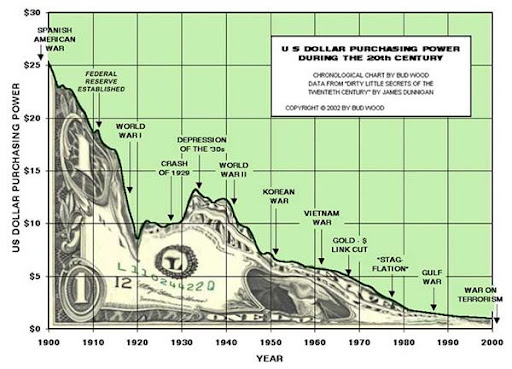


The "free market" is not at fault for this economic crisis, it is the all-too-predictable result of government intervention in keeping interest rates artificially low (an effort in housing price control that is like Diocletian's failed Edict on Prices), and the so-called business cycle that takes place as a result of the inflation-creating fiat money system imposed on us by government recognition of the Federal Reserve.

America is following down a dangerous path. It is almost exactly mirroring the policies that brought economic calamity to the Roman Empire and once more, has a much more powerful tool than the Romans had to do so.

What really gets me is that many of these expenditures are totally unnecessary. While the Romans somewhat had a reason for their military spending (to defend the people in the provinces that became dependent on the Empire), there is simply no need for many of these government bureaucracies and programs in a constitutional republic, the massive overseas spending that soaks many hundreds of billions of dollars a year being the best example of this. The continual creation of money by the Federal Reserve System that is required for this is set to bring massive amounts of inflation to these shores. Hyperinflation may indeed be a possibility.

The fall of Rome was a combination of many factors, but I would put economic reasons at the top of that list. When the currency goes, massive instability in a society is sure to follow. The government needs to wise up and wise up fast, for they are following down the agonizing road of decline that the Romans paved before- and dragging we the people down with them.


The third major reason for the collapse of Rome was demographic change.

When we examine the roots of this, we see that even the climate turned against Rome. The climate began to cool in around the 4th century AD. This triggered a vast migration and is termed the "Migration Period." These are the famed barbarian "invasions" of the Roman Empire that we popularly think as bringing about its downfall.

When the climate got colder, nomadic tribes on the Asian Steppe, including the Huns, migrated westward, displacing the already settled Germanic tribes in their wake. This caused pressure on Rome's frontiers, which as we know, were already very difficult to defend due to there not being enough manpower.


Due to the pressure exerted on them by the Huns, the Goths begged the Eastern Roman Emperor (by this time the Empire was officially split in two) Valens to give them refuge. The Romans assented, but imposed humiliating conditions on the Goths. These included disarmament (though this was not very successful, as Rome would soon see!) and conditions that brought them to the brink of starvation. Many Gothic children had to be sold into slavery in order to obtain food.

Not surprisingly, the Goths began an insurrection against the Eastern Roman Empire. Emperor Valens called his army and marched north to break the rebellion. He was not successful. Instead, he was crushed by the Goths at Adrianople, losing his own life in the battle.


In response, the new Emperor Theodosius formed a special treaty with the Goths, giving them land in exchange for military service when he called upon them (essentially a proto-vassalage that would later form the backbone of feudalism).

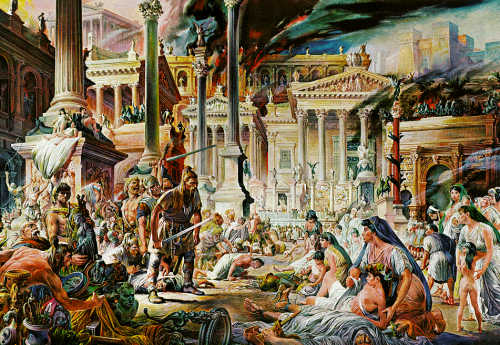
The Romans never truly accepted the Goths however, and it was only the results of Adrianople that accorded them such a special status. Gothic soldiers were subsequently used as cannon fodder for later Roman wars. In response, their new king, Alaric, did the unthinkable. He marched into Italy and sacked Rome itself.


After reading about all of this chaos, it is important to know that the "barbarians" did not want to destroy the Roman Empire. On the contrary, the Germanic tribes wanted to settle there and try their hand at success. For centuries, the Empire was where the prosperity was, and they wanted their own piece of the action. However, the continual migration did have very negative side effects: whereas previous immigration into the Empire was a steady stream, the mass of humanity that the Huns pushed into the Empire's borders caused dramatic upheavals in the demographic makeup of Rome. This caused civil strife, and the authoritarian actions of the Roman state only further increased the tension.

Does this sound familiar to you? Immigration has been a hot-button issue in recent years, almost as forbidden a fruit in politics as talking about social security reform or revising abortion laws. In 2006 and 2007, attempts to pass immigration bills failed miserably.

Likewise as the Romans became more and more fragmented due to huge demographic changes, America is beginning to see the same rumblings in its own borders. While it is impossible to know for sure, the numbers of illegals in the U.S. is probably over 20 million by now. The shift in the southwest is such that we see the newcomers telling Americans that the southwest belongs to them. Not surprisingly, many of the American citizens there have begun to leave, leaving the future very much uncertain.


I realize that most of the illegal immigrants coming to America, like the Germanic tribes immigrating to Rome before them, simply want a piece of the action, a part of the American prosperity, and given my strong free market, anti-state principles, I only wish them the best in that pursuit. Indeed, if the state would simply let the marketplace work and foster a strong economy, I think many of these immigration controversies would cease.

However, there is an eery similarity here to the immigration problems of the Romans. If the state's job is to defend its "citizens" (transformed into serfs now) from outside invasion, it has failed its very reason for existence by leaps and bounds. The demographic shift in the southwest may very possibly lead to massive instability in the future that mirrors the shift in society which saw the final evaporation of the Roman state.

Let us remember that it is NAFTA (a very much anti-free market treaty) that has been acting as the modern day economic Hun, displacing Mexicans from their homes and forcing them into the United States to survive.


It is hard of course, hard to tell how this will all turn out in the end, as a vast array of factors need to be considered. I find myself sturggling to reconcile my free market principles with my desire to avoid the civil strife that I see happening if illegal immigration continues to go unchecked. I hold that I have no immediate solution to the problem, as many of the possibilities require more state involvment (amnesty, deportation, etc.).

Repealing NAFTA would be an excellent start in solving these problems, as it would give Mexicans an actual opportunity to earn a living in their own country. Ending coercive state welfare benefits that many illegals take advantage of would also be a good impetus to prevent a further flood of migrants (and would still be logically consisten libertarianism to boot!). From there, the market ought to work itself out in the end (if the government would let it).

In 476 A.D., the last Roman Emperor in the west abdicated, thus formally ending the Western Empire. The Eastern Empire would continue on for one thousand years more, and still called itself Roman until the Medieval period. But never again would there be the glorious empire of old. Never again would the Western World be so thoroughly dominated by a single power.

When contemplating the fall of Rome, we must understand that it was a failure of government that caused the collapse. I reject wholeheartedly the premise that a "decline in morality among the people" was part of the problem, and likewise, I reject that same premise today. Adultery, drunkenness, and sex orgies do not cause an overreach in power, or inflation, or authoritarian measures that antagonize the public and increase instability in society. In fact, we need more people who take part in such wild parties rather than more "public servants" that weild power over their fellow men.


Rome's problems started when the state overreached and conquered more than it could afford to, causing the need to inflate the currency to finance its military machine. Although great benefits eventually came to the provinces (such as the advance in technology), we must remember that it was by the sword that these things came. The first generations of conquered peoples were stripped of their freedom to live as they chose, and many were sold into slavery. As always, the sword always creates more problems than it solves, and hence the decline of the Empire was as sure a thing as the premise that water is wet.

It is not surprising that as power began to slip through the Empire's fingers, the fist of Rome began to tighten, some examples being Diocletian's edict on prices as well as his empire-wide persecution of Christians (due to them not paying homage to the Roman state and the divinity of the emperor, of course).

It was such authoritarian measures that triggered the Goths to rebel and Alaric to sack Rome. Had the Roman state treated them more kindly, I am sure that the market would have eventually worked out any issues among the populace, just as I am sure it will today. It is both an angering and amusing piece of news to me that people have been arrested on planes under the misnamed "Patriot Act" for arguing with flight attendants. The reasons for my anger ought to be obvious, but the news also somewhat amuses me because such authoritarian actions are an easy sign to see that America is declining just as the Romans did before.
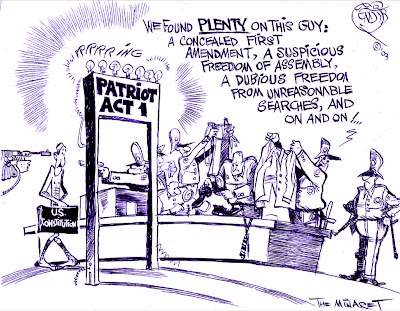


In the end, these signs are very alarming as to the future of the country, not because I am attached to the state, but because I am concerned that the government is dragging me and my fellow men down a path of chaos and woe. It was excessive government that killed Rome, and it is excessive government that is killing America.
President Obama campaigned on the words "change" and "hope." However, there can be neither if the government does not come to its senses and steer off the path first paved by Rome. Unfortunately, I see no signs of this happening.

It will be up to We the People to prevent a new collapse. We must pump the blood of liberty into the heart of a country poisoned by collectivism and a false image of national greatness to stop this madness and learn the lessons of history.